


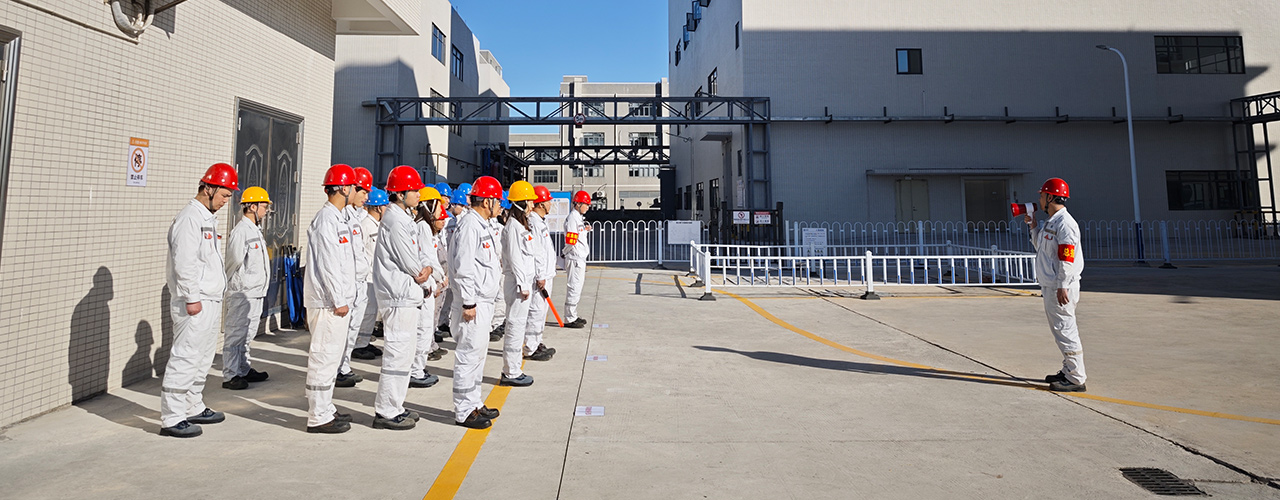
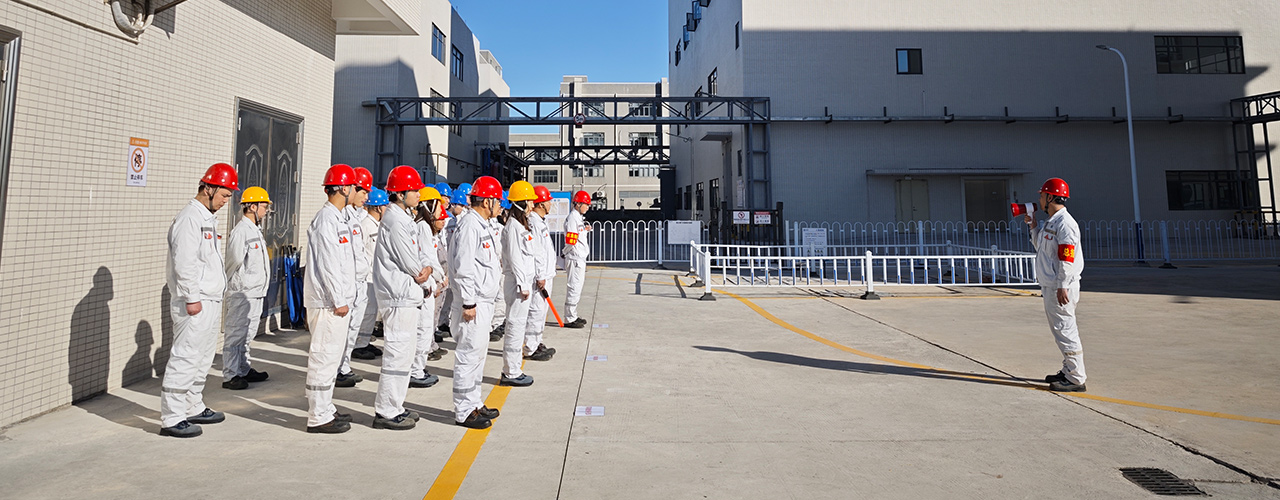
To address potential fire and explosion risks, Huizhou Juhui Environmental Materials Co., Ltd. (“Juhui Environmental”) successfully conducted an RCO fire and explosion emergency drill on November 29, 2024. The drill took place in the company’s auxiliary workshop and involved all employees. By simulating a realistic emergency scenario, the exercise tested and enhanced the effectiveness of the company’s emergency response plan as well as employees’ emergency response capabilities.
Purpose and Significance of the Drill
The purpose of this drill was to evaluate employees’ response procedures, command and coordination capabilities, incident reporting process, and emergency rescue skills when dealing with emergencies such as fires and explosions. Through hands-on practice, employees’ safety awareness and emergency response capabilities were significantly improved. The drill also verified the practicality and operability of the company’s emergency response plan, laying a solid foundation for handling potential emergencies in the future.
Scenario and Process
The drill simulated a fire and explosion at the RCO treatment unit during routine production operations due to unstable system pressure. The exercise covered multiple stages, including alarm activation, personnel evacuation, and process emergency handling, providing comprehensive coverage of the full emergency response process from incident detection to response execution.
Emergency Action Guidelines for Employees
In the event of an emergency, employees of Juhui Environmental should take the following actions:
1.Report immediately: Once an emergency is identified, report it immediately to the shift supervisor or direct superior.
2.Follow instructions: Obey the directions of the shift supervisor, duty manager, or emergency command center, and act in accordance with the established emergency response plan.
3.Evacuate promptly: Evacuate quickly and orderly to a safe area according to emergency broadcast instructions or on-site command guidance.
4.Carry out process emergency actions: Production personnel should immediately implement emergency shutdown procedures and necessary process control measures, such as closing relevant valves and suspending unloading operations.
5.Wear appropriate PPE: When entering hazardous areas for emergency response, employees must wear appropriate personal protective equipment, such as fire-resistant suits and respirators.
6.Use firefighting equipment: If the fire is still controllable, trained personnel may use extinguishers and other firefighting equipment to carry out initial fire suppression.
7.Provide first aid: For injured employees, trained first-aid personnel should provide necessary emergency treatment while awaiting professional medical assistance.
8.Contact external emergency services: When necessary, promptly call 119 for fire services and 120 for medical assistance.
9.Protect the scene: Where safe to do so, preserve the accident scene to support incident investigation and follow-up actions.
10.Provide feedback: Report on-site conditions and the measures taken to the emergency command center in a timely manner.
11.Remain calm: Stay calm, avoid panic, and do not spread unverified information.
12.Support follow-up work: Depending on the progress of incident handling and company instructions, employees may be required to participate in post-incident cleanup and recovery work.
Results of the Drill
Through this exercise, Juhui Environmental’s employees gained a deeper understanding of the emergency response plan and received practical training in emergency handling. After the drill, Chief Commander Li Naitao gave a summary and evaluation, emphasizing the importance of continuously improving and optimizing the emergency response plan.
Looking Ahead
Juhui Environmental will continue to strengthen its emergency management system, enhance employees’ safety awareness and emergency response capabilities, and ensure effective protection of both employee safety and company assets in the event of a real emergency.
Conclusion
Safety is no small matter, and prevention always comes first. Through this RCO fire and explosion emergency drill, we not only tested the effectiveness of our emergency response plan, but also improved our employees’ emergency response capabilities. Let us work together to build a safer working environment.